
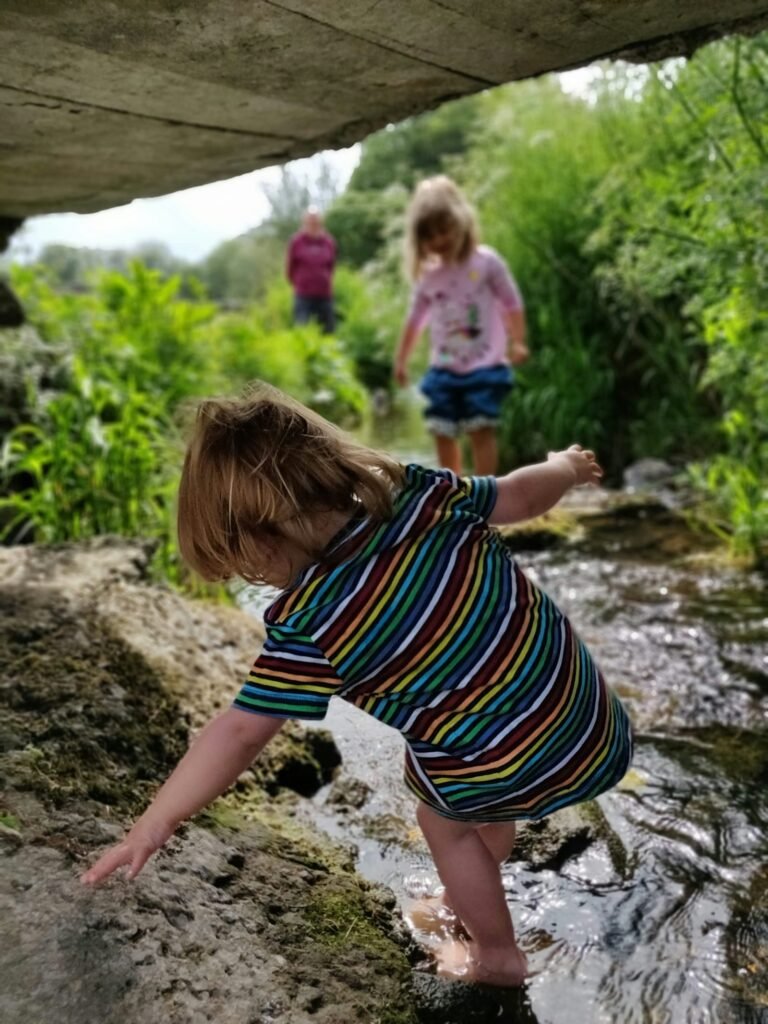
People are often surprised when I tell them some of our best homeschooling happens on a trail, not at a table. Hong Kong is famous for its skyline, but for a homeschooling family it has a quieter gift: green hills, streams, beaches and wetlands that are often just a bus ride away.
Nature-based learning in Hong Kong has been part of our family’s rhythm for years. In this post I’ll share why we make time for it, how we turn outings into real learning, and some of the places we love to explore.
It’s one part of my guide to gentle, child-centred homeschooling in Hong Kong.
Why nature belongs in your homeschool
Nature-based learning simply means using the outdoors as a regular place of learning, not just for a once-a-term trip. For us it brings:
- Real-world science. Life cycles, weather, rocks, tides and ecosystems are far more memorable when you can touch and observe them.
- Calm and focus. Many children, especially those who feel anxious or restless indoors, settle more easily after time outside.
- Physical confidence. Climbing, balancing and walking on uneven ground build strength and judgement.
- Curiosity. Questions arise naturally: “Why is this crab that colour?” “Where does this stream go?”
- Connection. Unhurried time together, away from screens, has strengthened our family more than anything else.
Hong Kong is greener than people think
A large part of Hong Kong’s land is protected as country parks and special areas, so even families in the busiest districts can usually reach a trail, reservoir or beach without much travel. The Agriculture, Fisheries and Conservation Department (AFCD) also runs nature education programmes and visitor centres through its Nature in Touch initiative, which are worth exploring.
Places we love for nature learning
| Place | Great for |
|---|---|
| Shing Mun Country Park and the Pineapple Dam Nature Trail | Gentle walks, reservoirs, monkeys and forest observation; there’s a visitor centre too |
| Tai Po Kau Nature Reserve | Woodland trails, birds and insects, studying forest layers |
| Hong Kong Wetland Park, Tin Shui Wai | Wetland habitats, birdwatching, mudskippers and fiddler crabs; good on rainy days with indoor galleries |
| Lions Nature Education Centre, Sai Kung | Gardens, insects, shells and rocks, with easy paths for younger children |
| Hong Kong UNESCO Global Geopark areas | Rocks, coastal landforms and Earth science |
| Rocky shores and beaches | Tide pools, shells and marine life (observe and leave everything where you found it) |
Always check opening times, weather warnings and trail conditions before you go, and respect any rules in protected and marine reserve areas.
How to turn an outing into real learning
The secret is to keep it light. Nature learning shouldn’t become a worksheet in the woods. Here’s our simple approach:
Before: spark a question
Read a picture book or look at a few photos before the outing. “What do you think lives in a stream?” A single question gives the trip a purpose without making it a lesson.
During: slow down and notice
- Choose one “sit spot” and spend ten quiet minutes observing what moves, sounds and changes
- Take close-up photos of leaves, insects or rocks to look up later
- Count, measure and compare: how many legs, how tall, which is heavier?
- Follow your child’s interest, even if it’s a single snail for twenty minutes
After: capture and connect
- Nature journal: a sketch, a few words, the date and the weather. Over a year, this becomes a beautiful record of learning.
- Look it up together: identify the bird, read about the rock, find out why the tide was so low.
- Grow a project: a fascination with crabs can lead to a week of reading, drawing, maths and writing. That’s project-based learning at its best.
Nature learning across subjects
| Subject | Outdoor ideas |
|---|---|
| Science | Life cycles, habitats, weather tracking, rock types, tides |
| Maths | Counting, measuring tree girth, estimating distances, timing walks, symmetry in leaves |
| Literacy | Nature journals, poems, descriptive writing, reading field guides |
| Art | Leaf rubbings, sketching, natural collages (from fallen materials only) |
| Geography and history | Reading maps, learning how reservoirs supplied the city, visiting old villages |
| Wellbeing | Quiet observation, breathing walks, gratitude moments |
Younger children love collecting and sorting natural objects, which links beautifully with Montessori activities at home.
Practical tips for Hong Kong outings
- Heat and humidity: go early in the morning in summer, carry plenty of water and plan shaded routes.
- Weather warnings: check the Hong Kong Observatory before leaving, especially in typhoon and rainstorm season.
- Insects: long, light clothing and repellent help on forest trails.
- Wildlife: don’t feed monkeys or other animals, and keep snacks out of sight.
- Leave no trace: take rubbish home and leave plants, shells and animals where they belong.
- Start short: a 30-minute walk your child enjoys is better than a long hike they dread.
Nature and emotional wellbeing
For my children, time outdoors has been one of the most reliable ways to reset after a hard day. A walk by the water often does more than any conversation. If your child is anxious or overwhelmed, I share more about how we support them in homeschooling an anxious child.
Frequently asked questions
What is nature-based learning?
It’s an approach where the outdoors is a regular place of learning. Children observe, explore, ask questions and connect what they find to subjects like science, maths and writing.
How often should we do nature learning?
Whatever is sustainable. Many homeschooling families set aside one morning or one day a week, plus short daily time outside when possible.
Is nature-based learning suitable for older children?
Yes. Older children can take on field studies, data collection, map reading, photography and in-depth research projects based on what they observe.
What should we bring on a nature learning walk?
Water, snacks, sun protection, a small notebook and pencil, a magnifying glass, and a phone or camera for photos. Keep it light so the walk stays enjoyable.
Are there nature education programmes in Hong Kong?
Yes. The AFCD runs visitor centres and education programmes in country parks, and places like Hong Kong Wetland Park offer exhibitions and activities for children.
Step outside
You don’t need a forest school or a special curriculum to start. Pick a nearby trail, bring a notebook and let your child lead. Some of the deepest learning we’ve ever done began with “What’s that?” For the full picture of how outdoor time fits into our week, read my guide to homeschooling in Hong Kong.